Terrace Waterproofing: Systems, Materials and Common Failures
The waterproofing systems used on Indian terraces — brickbat coba, liquid membranes, APP membranes, cementitious coatings — how they compare, what the slab needs first, and why they fail.
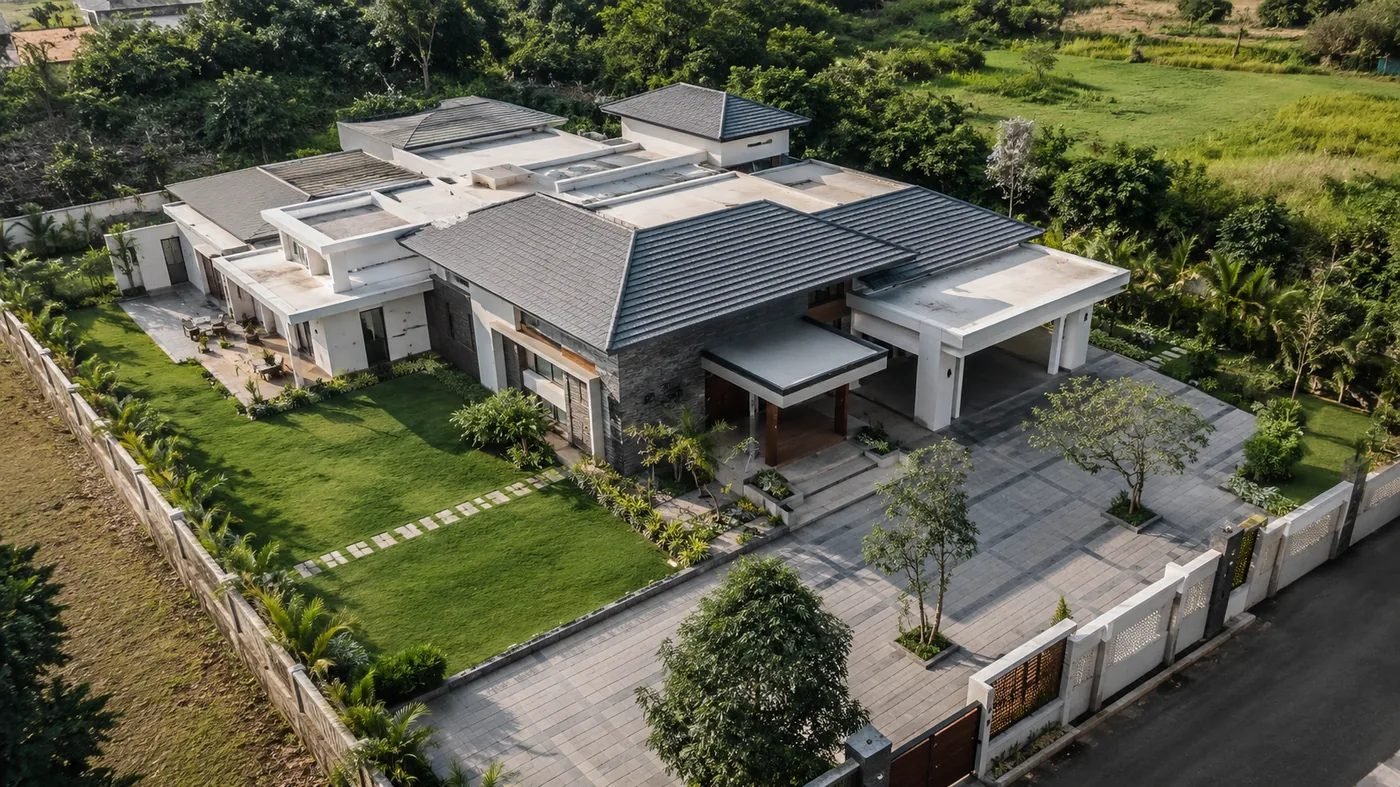
The terrace is the most exposed surface of a home: heat by day, rapid cooling at night, and four months of monsoon. Waterproofing it is less about the product than about the sequence — a sound slab, a slope to drains, a system applied to the right thickness with the right terminations, and a test before anything covers it.
Before any system: the slab and the slope
- Slab cured fully, honeycombing repaired, cracks treated.
- Slope of 1 in 80 to 1 in 100 towards rainwater outlets — either in the slab or in a screed.
- Outlets sized and placed so that water does not travel more than about 6–8 m; overflow pipes at the parapet.
- Parapet–slab junction coved (a 45° fillet) so the membrane does not turn a sharp corner.
Systems compared
| System | How it works | Typical thickness / build-up | Strengths | Watch-outs |
|---|---|---|---|---|
| Brickbat coba | Brick pieces in lime/cement mortar, finished with IPS | 75–150 mm | Insulation, slope built in, familiar to masons | Heavy; cracks with slab movement; not a membrane on its own |
| Cementitious coating (2-component acrylic-polymer) | Brush/roller coats bonded to concrete | 2 coats, ≈ 1–1.5 mm | Breathable, good for bathrooms and plinth | Limited crack-bridging; needs protection |
| Liquid-applied membrane (PU / acrylic elastomeric) | Seamless elastic film | 1.5–2 mm dry film | Bridges hairline cracks; no joints | Thickness must be measured; UV-stable top coat or protection needed |
| APP / SBS bituminous membrane | Torch-applied factory sheet | 3–4 mm, overlaps 100 mm | Consistent thickness; proven | Skill at laps and upturns; needs protection screed or tiles |
What we specify and why
For most independent homes we use a membrane system — liquid PU or an APP sheet depending on the terrace geometry — over a sloped screed, with upturns of at least 150 mm at parapets terminated in a groove, followed by a protection screed or tiles laid on a bedding that does not puncture the membrane. Brickbat coba on its own is insulation, not waterproofing, and we do not rely on it alone.
The test that matters
After the membrane cures and before the protection layer, the terrace is flooded to 50–75 mm for at least 48–72 hours and the underside inspected for damp patches. A system that is covered before this test cannot be repaired without removing everything above it.
Why terraces fail
- No slope, so water stands and finds any weakness.
- Membrane stopped at the floor without an upturn at the parapet.
- Pipes and outlets not sealed with collars.
- Protection layer laid directly on the membrane, puncturing it.
- Later work — a water tank platform, a railing post — drilled through the membrane.
The reasons these failures appear months later rather than immediately are covered in Why Waterproofing Problems Often Appear Months After Handover.
Maintenance after handover
Even a good system needs three things from the homeowner: keep the rainwater outlets clear before and during the monsoon, do not drill or fix anything through the terrace without a proper collar and sealing, and inspect the parapet coping and any pipe penetrations once a year. Most terrace repairs we see are from a single drilled fixing or a blocked outlet, not from the membrane itself.
Frequently asked questions
Is brickbat coba enough on its own?
No. It provides slope and insulation, and traditional lime coba has some self-healing character, but it is not a waterproof membrane. Use it with a membrane system, or use a sloped screed under a membrane instead.
How long should terrace waterproofing last?
A properly detailed membrane system with protection should last 10–15 years before renewal; liquid coatings without protection are shorter-lived. The warranty in your contract should state a period — typically 5–10 years for the system as installed.
Can waterproofing be done during the monsoon?
Membranes need a dry substrate and several dry hours to cure. Plan terrace waterproofing for the dry season; if it must happen in monsoon, it needs a covered, dried surface and the schedule will slip.